
Historic Home Renovation in Franklin, TN
Historic home renovation in Franklin, TN runs on a different clock than the rest of Middle Tennessee.
Here is why.
If the house sits inside the city's Historic Preservation Overlay, most exterior changes go through design review before a permit is issued. Plan around that from the start and it is a schedule item. Discover it after demo and it is a problem.
What changes when the house is old
Plaster instead of drywall. Framing that was cut on site. Floors that have moved. Window openings that were never square and should not be forced square now.
Ramona's design work came out of studying how European cottage homes age. That is useful background in a house that has already been aging for a century.
Homes built before 1978 also bring lead-safe work practice requirements into any project that disturbs paint. That is a federal rule, not a style preference, and it belongs in the plan from the first conversation.
Source: Lead Renovation, Repair and Painting Program. U.S. Environmental Protection Agency. Accessed August 17, 2026. epa.gov
The Historic Preservation Overlay and the COA
Let's break it down.
If your home is in Franklin's Historic Preservation Overlay, the Historic Zoning Commission reviews exterior changes against the Franklin Historic District Design Guidelines and issues a Certificate of Appropriateness.
National Register listing and the local overlay are not the same thing. The local overlay is what triggers COA review. Franklin's National Register districts (the Franklin Historic District, Hincheyville, Lewisburg Avenue, Adams Street, and Natchez Street) are context for the housing stock. They do not, by themselves, decide whether your address needs a COA.
Work that goes through COA review generally includes:
- Additions, porches, and decks
- Alterations or repairs that require a building permit
- Interior alterations that change the exterior appearance
- Window, door, siding, and masonry changes visible from the street
- Partial or full demolition
Some minor alterations that do not substantially change the exterior can be approved administratively, at the Preservation Planner's discretion. That is a determination the city makes, not one we make for you.
The Commission meets monthly. The calendar, not the crew, sets the pace early in the project. We plan the schedule around it rather than assuming a date.
Sources: Certificate of Appropriateness. City of Franklin. Accessed August 17, 2026. franklintn.gov/coa. Historic Zoning Commission. City of Franklin. Accessed August 17, 2026. franklintn.gov/hzc
What we handle, and what we do not
We prepare drawings, material specifications, and photo documentation in the form the review expects, and we build to what gets approved.
We do not promise an approval, a review timeline, or an outcome. That is the Commission's call.
Older homes outside the overlay
Plenty of Franklin's older houses sit outside a historic district and carry none of the review requirements. They still carry the construction realities.
If you are not sure which applies to your address, the city's overlay map is the place to check, and it is worth checking before you draw anything.
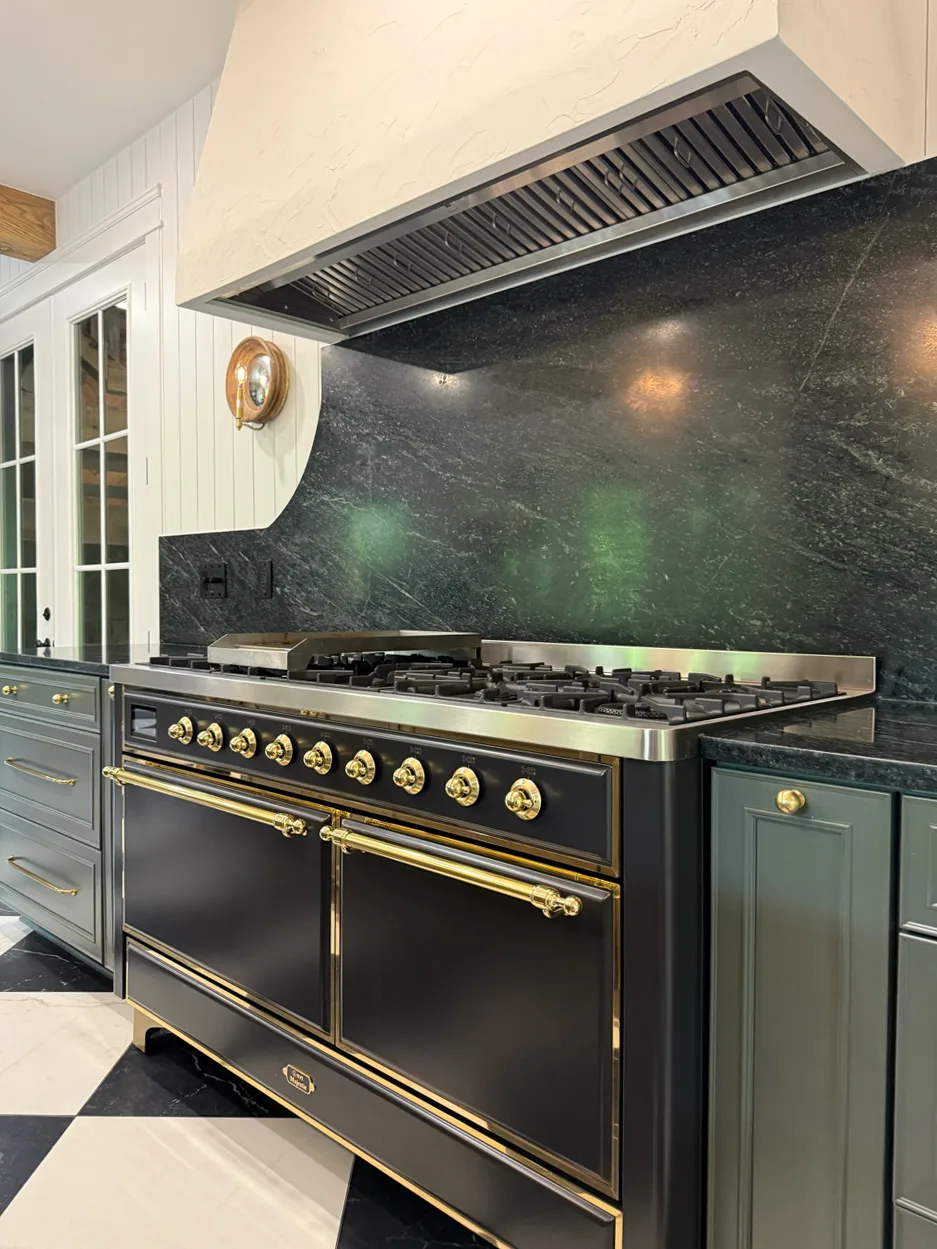
Cottage materials and aged-in finishes show up in the Cortina kitchen. That is not a historic-overlay job. It is the same material language older houses tend to need. The Old Hillsboro full renovation is another finished house in the portfolio.
Tell us about your house
Next steps.
A quick call or a few lines in the form is enough. No pressure, no pitch.